How to Automate Asset Import Scheduling in JSM Cloud
Platform Notice: Cloud Only - This article only applies to Atlassian apps on the cloud platform.
Summary
Discover how to use Automation rules to schedule Assets imports as a workaround for current limitations.
Solution
Things to keep in mind
Use an automation rule to schedule imports. First, execute the import to generate the import configuration ID needed for the rule.
Use the New feature: Import and refresh Insight data from a URL to minimize manual work. After setting up the rule, data from the URL is automatically imported into JSM Assets.
This scheduling workaround only works for JSON & CSV imports where files are already uploaded to Assets. It does not work for Discovery or External imports (e.g. Microsoft Entra ID / Azure AD sync) — those are processed externally and must be run from the UI.
Automation rule to schedule imports
Run the import once first to generate the import configuration ID needed by the rule. Then:
Project settings > Automation > Create rule.
Trigger: Scheduled (a cron expression is supported).
Action: Send web request to the Start import REST API.
Web request URL:
https://api.atlassian.com/jsm/assets/workspace/<YOUR WORKSPACE ID>/v1/import/start/<IMPORT CONFIGURATION ID>To find your ID: Discover your workspaceId.
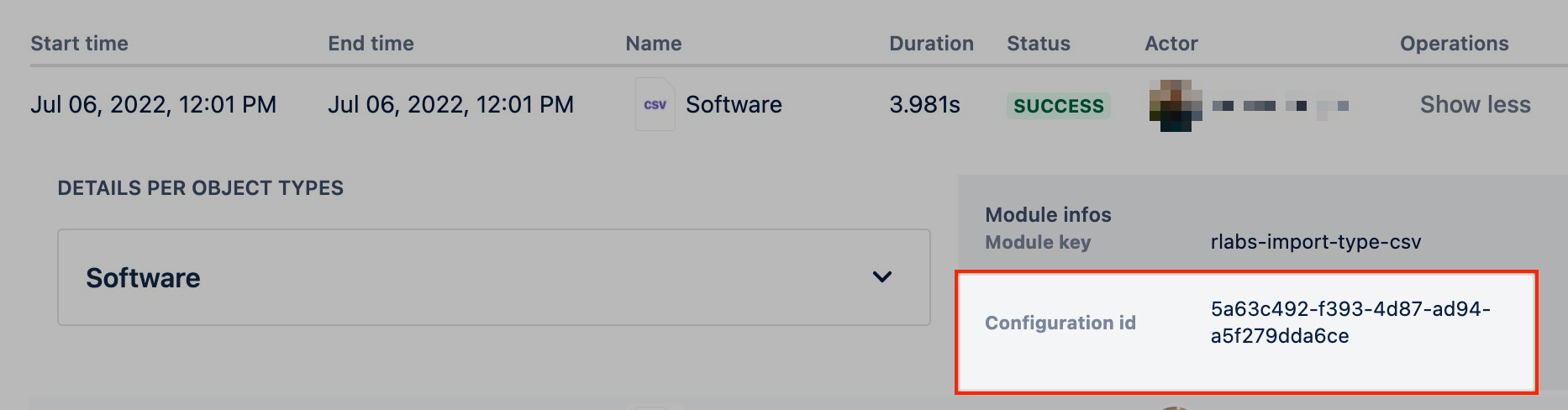
To find the import configuration ID, go to import history and find the configuration ID for the corresponding import configuration:
Headers:
Authorization:
Basicfollowed by the base64 of youremailaddress:APItoken. So if the base64 of theemailaddress:APItokenis AB12XY45, add the valueBasic AB12XY45. Steps on how to generate the API Token can be found here.Accept:
application/json.
HTTP Method: POST
Web request body: Empty.
Publish the rule.
After the scheduled time, check the Assets import history to confirm the import ran, and review the automation audit log for the web-request response.
For more examples of how you can use Automation with Assets, check out Update Assets object attribute values using automation.
Was this helpful?