Update Objects in JSM Assets Cloud via CSV Import
Platform Notice: Cloud Only - This article only applies to Atlassian apps on the cloud platform.
Summary
Learn how to update existing objects using CSV import in JSM Assets Cloud.
Solution
To update existing objects via CSV, the import config must have a unique attribute set as the identifier. If the importer can't match records by the identifier, it recreates objects rather than updating them.
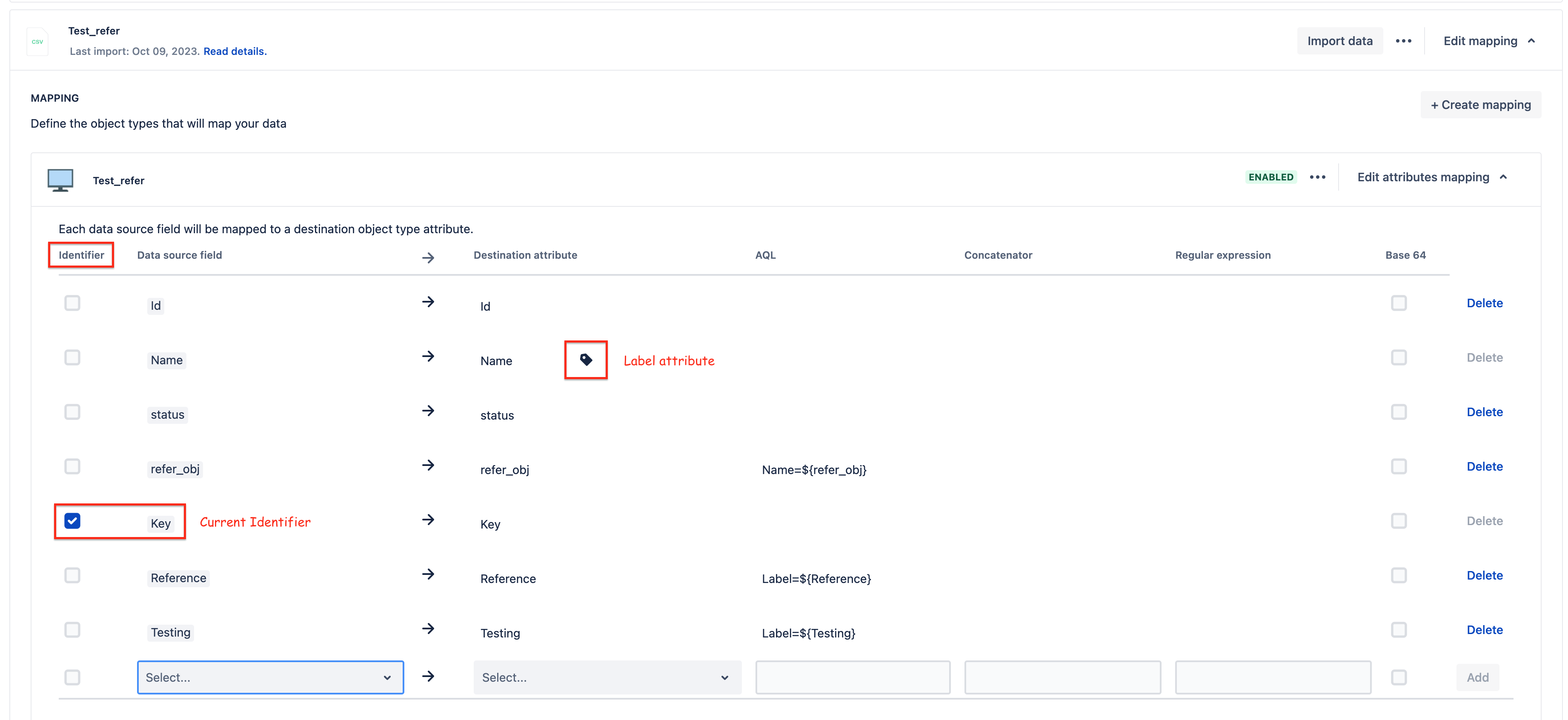
The Key attribute can't auto-generate values for new objects and should not be the primary identifier for new imports; use another unique, non-null column (for example, Serial Number or Store Number) and map it correctly. The label attribute is generally the identifier in object-type mapping.
The identifier is used by the Assets import to identify whether an object in the CSV is similar to an existing object in Assets.
Generally, the label attribute is marked as the identifier in the object type mapping in the import. Ensure that all required attributes are correctly mapped to align with the object schema. Verify that referenced objects exist in the target schema and that custom fields are properly configured, including filter scopes, before beginning the import.
If the Assets import can't identify similar objects in the CSV file using the identifier, it recreates the objects instead of updating/ignoring the existing ones.
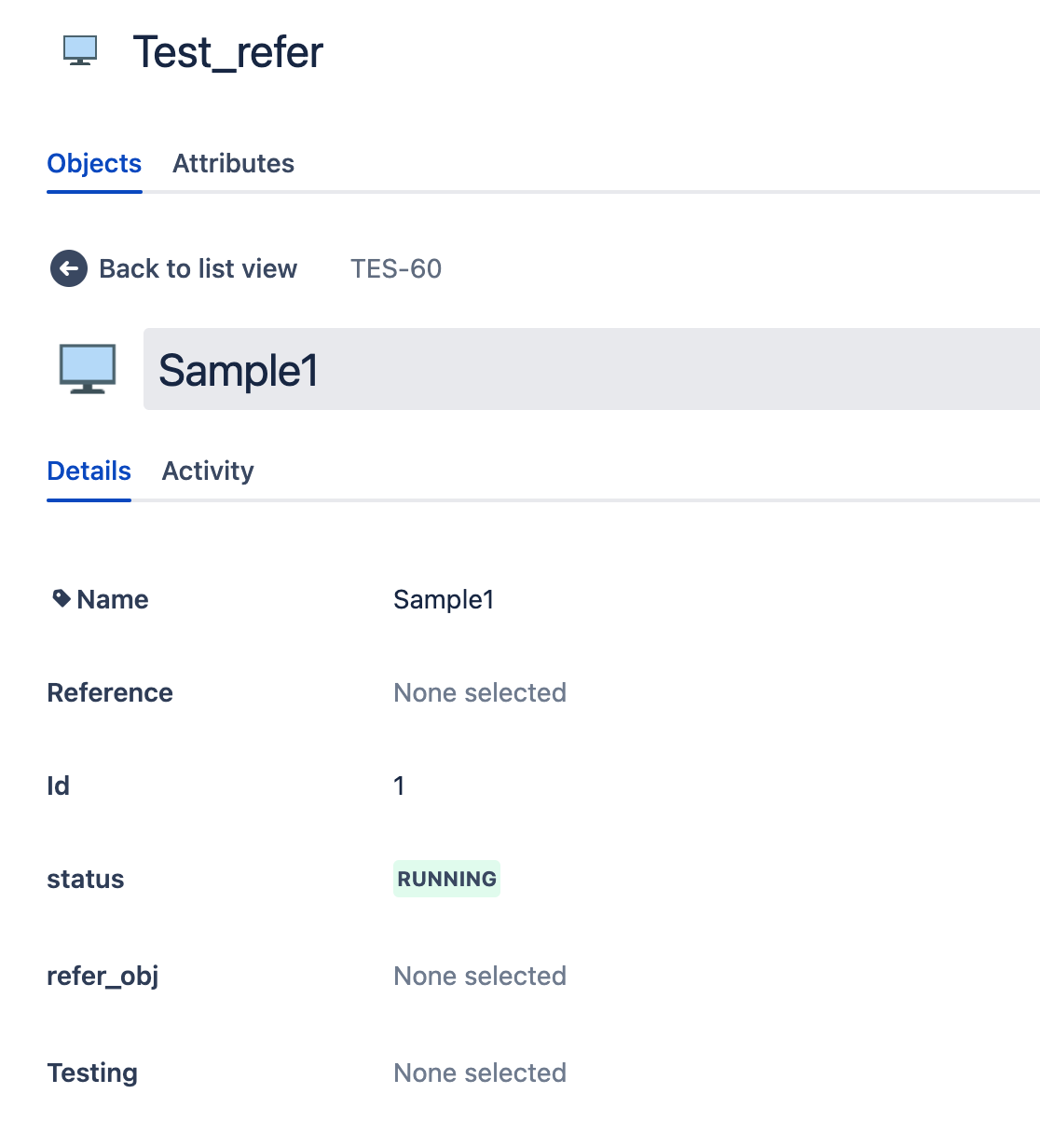
For example, we have an object called "Sample1" in the object type "Test_refer" as below:
Using the Import config below, where the Identifier is marked as a "Key" attribute, we have updated the existing object and highlighted the "Label" attribute in the object type mapping.
Refer to the CSV file used:
CSV File
Key,Name,Reference,Id,status,refer_obj,Testing
TES-60,Sample1,Refer_obj,1,Running,,Telnet
Confirm that referenced objects exist in the target schema and that custom fields have proper filter scopes before importing. Then run the import and verify that a sample object was updated (not duplicated).
Run the import on a small test CSV and confirm existing objects are updated (not duplicated). If duplicates appear, the identifier isn't matching.
Use a unique, non-null column as the identifier — Label, Key, or a Key + Name/Label combination. Don't rely on Key auto-generation for new objects.
Map all required attributes and confirm referenced objects exist in the target schema before importing.
For multi-value attributes, separate values with double pipes
||and no extra spaces.
The objects wouldn't be updated by Assets Import in the below scenarios:
If objects are excluded based on the configuration set in the "Filter data source by AQL" field of the Object type mapping.
If the "Filter Objects" settings are configured for the Object attribute, the value of the object attribute will not be updated through the Assets Import as per the configured filter.
Related article
Was this helpful?